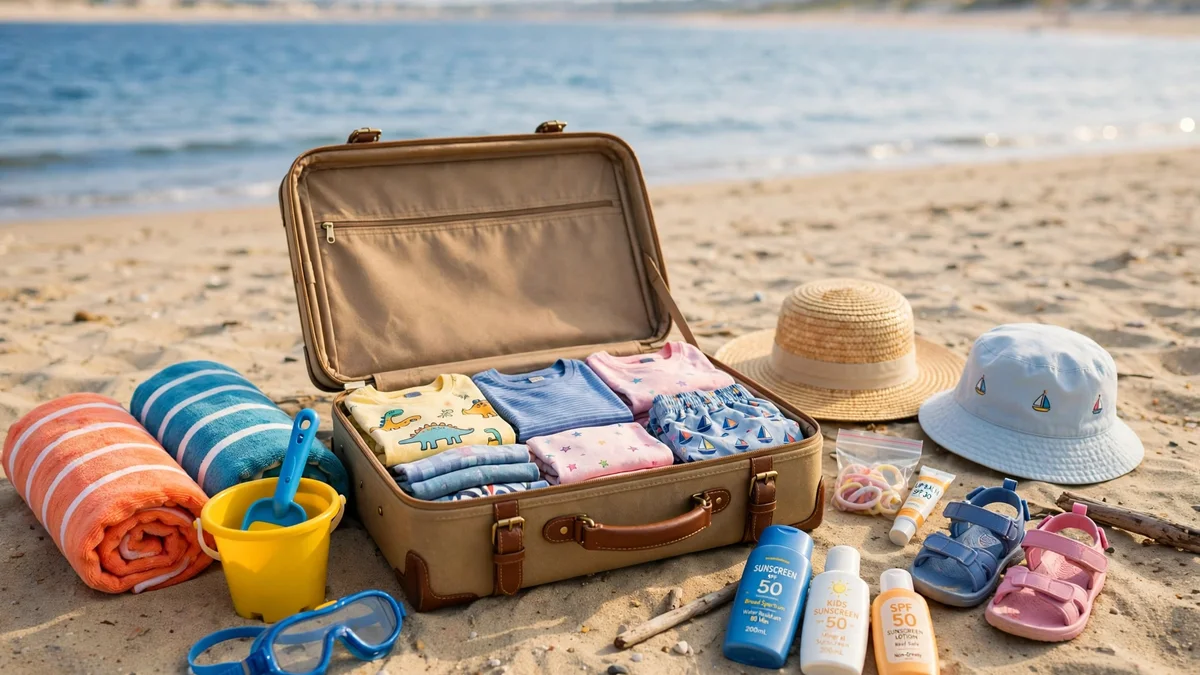
You are standing in the hallway with an open suitcase, a pile of swimsuits on the bed, and a child asking whether the big bucket can come too. A beach vacation with kids is supposed to feel relaxing, but the packing often feels like the hardest part of the trip. The good news is that packing for the beach is mostly about getting the basics right: sun protection, dry clothes, water, snacks, and a few things to keep small hands busy.
Start With a Simple Packing System
Before you pack a single thing, decide how you will carry it all. One large beach bag or tote for the day’s essentials works better than three small ones, because you will be carrying it across hot sand while holding a child’s hand. Pack a separate small bag for the car or the walk back, with dry clothes and the car keys, so you are not digging through a sandy tote at the end of the day.
Use packing cubes or large zip bags to group things by child. Each child gets one cube with their swimsuits, one with dry clothes, and one for everything else. When a child needs a dry shirt, you open one cube instead of emptying the whole bag on the sand. The same thinking behind how to pack light for a week-long trip applies here: pack for the trip you are actually taking, not for every version of it you can imagine.
Clothes: Pack for Sand, Water, and Sun
Kids get wet, sandy, and sunburned in that order, usually before lunch. Plan on two swimsuits per child per day if you can manage it, because a dry swimsuit after lunch is far more comfortable than a damp one. Add one rash guard or swim shirt per child; long sleeves block more sun than sunscreen alone and mean fewer reapplication battles.
For dry clothes, keep it simple: a clean T-shirt, shorts, and underwear for each day, plus one warm layer for the evening, even in warm places. Water shoes or sturdy sandals protect small feet from hot sand, shells, and sharp stones. A wide-brim hat for each child is worth the space it takes — it shades the face, ears, and neck that sunscreen often misses.
Sun Protection: The Non-Negotiable Part
Sun protection is the one category where running out is not an option. Pack more sunscreen than you think you need. A family of four can easily go through a full bottle in a day at the beach, especially with reapplication after swimming. Choose a broad-spectrum sunscreen of SPF 30 or higher, and apply it at least 15 minutes before sun exposure. Reapply every two hours and after every swim, even if the bottle says water-resistant.
Sunscreen sticks work well for faces, because they do not drip into eyes and are easy to aim on a wriggling child. A spray can cover arms and legs quickly, but rub it in after spraying so the coverage is even. Add lip balm with SPF, and keep a small tube in the beach bag rather than in the car. Sunglasses with real UV protection are worth packing too — look for a pair that stays on with a strap for younger children.
Swim Gear and Beach Toys
Floats, armbands, and life jackets deserve a careful thought before you pack them. Armbands and inflatable rings are toys, not safety devices. If your child cannot swim confidently, a properly fitted, coast-guard-approved life jacket is the safer choice, and it should be tried on before the trip so you know it fits. Goggles and a snorkel mask can turn a nervous swimmer into a curious one, so pack them if your child enjoys looking underwater.
For toys, less is more. A bucket and spade, a small shovel, and a couple of sand moulds will keep most children busy for hours. A mesh bag is the best way to carry them, because the sand falls out on the way back. If you want more ideas for keeping kids entertained by the water, this schedule of ocean-themed games for kids uses simple materials and works just as well on a beach afternoon as it does at home.
Food, Drinks, and Snacks That Survive the Sand
Children at the beach are hungry, thirsty, and sandy, often all at once. Pack a cooler or insulated bag with water bottles for everyone — frozen bottles double as ice packs in the morning and cold drinks by lunch. Avoid glass containers on the beach; use plastic or metal bottles and containers instead.
Choose snacks that do not mind a little sand: whole fruit such as bananas and apples, crackers in sealed bags, cheese sticks, granola bars, and sandwiches wrapped tightly in foil or reusable wraps. Skip anything crumbly, sticky, or melty. Pack wet wipes and a small trash bag so you can clean hands before eating and leave the beach the way you found it.
A Small Health and Safety Kit
A small first-aid kit takes almost no space and saves the day when it is needed. Pack adhesive bandages in a few sizes, antiseptic wipes, children’s pain relief if your doctor has recommended it, any regular medication your child takes, and a small bottle of saline spray for sandy eyes. Add a few safety pins and a small pair of scissors.
Write your phone number on a wristband or a tag inside your child’s hat, and agree on a meeting point before you spread out your towels. Teach younger children that if they get lost, they should stay where they are and ask a lifeguard for help. Check whether the beach has lifeguards before you arrive, and pick a spot near them when you can.
Packing for Babies and Toddlers vs. Older Kids
The list changes with age. For babies and toddlers, add diapers and swim diapers, extra changes of clothes, a sun tent or umbrella for shade, a familiar blanket, and baby-safe sunscreen. A small inflatable paddling pool lets a toddler splash safely in the shade. Bring twice as many wipes as you expect to use.
Older kids can carry their own small backpack with their towel, water bottle, sunscreen, and one toy. Letting them pack it themselves, with a quick check from you, teaches them to look after their own things and lightens your load.
What to Leave at Home
Some things only add weight and worry. Leave expensive jewellery and electronics you do not need at the hotel or at home. Leave the full-size shampoo and the hairdryer; one small bottle of leave-in conditioner is enough for beach hair. Leave the hardcover books and the big board games — sand gets into everything. Leave the extra shoes: one pair of sandals and one pair of dry shoes per person is enough.
FAQ:
How many swimsuits should I pack per child?
Two per day is ideal — one for the morning swim and a dry one for after lunch. If you are staying near laundry facilities, one per day plus a spare will do.
What is the best sunscreen for kids at the beach?
A broad-spectrum sunscreen of SPF 30 or higher, applied before sun exposure and reapplied every two hours and after swimming. Sticks are easiest for faces, and a rash guard adds protection sunscreen alone cannot.
How do I keep sand out of the car on the way home?
Shake towels and clothes out before you leave the beach, rinse feet with a bottle of water, and keep a large plastic bag or an old sheet on the car seat for the ride home.
Do I need a beach tent or umbrella for kids?
A source of shade is strongly recommended, especially for babies and toddlers. A small pop-up tent or umbrella gives children a cool place to rest, eat, and escape the strongest midday sun.
Final Thoughts
Packing for a beach vacation with kids does not need to be stressful — it needs a short list, checked twice, and a bag packed the night before. Get the sun protection, the dry clothes, the water, and the snacks right, and everything else is a bonus. Once the bags are packed, the beach does the rest: the sand, the waves, and a bucket are usually all the entertainment a child really needs.