You step off the train in a beautiful new city, guidebook in hand, and within minutes someone friendly is offering you a “free” bracelet, a taxi driver is quoting a fare that sounds far too high, and a stranger is warning you that the museum ahead is closed today. Most trips pass without any of this turning into real trouble, but tourist scams are one of the most common ways a good holiday loses money and peace of mind. The good news is that nearly every scam follows a pattern, and once you know the pattern, it becomes easy to spot.
Why Tourists Are Easy Targets
Scammers do not pick victims at random. They look for people who are distracted, unfamiliar with local prices, and unsure of the rules. A first-time visitor does not know what a taxi should cost, which ticket office is official, or how a local police officer is supposed to look. Add jet lag, a language barrier, and the excitement of a new place, and even careful travelers can be caught off guard. Understanding this is the first step: scams work because they exploit confusion, not because travelers are careless.
The Most Common Tourist Scams and How to Spot Them
The Overpriced Taxi
A driver outside the airport or station quotes a flat fare with no meter, or the meter “happens” to be broken. The fix is simple: use official taxi stands, ride-hailing apps, or public transport where possible, and agree on the fare or confirm the meter is running before the car moves. If a driver refuses, walk away and take the next cab. Learning the rough cost of a common route before you arrive takes two minutes and removes the guesswork entirely.
The “Free” Gift or Bracelet
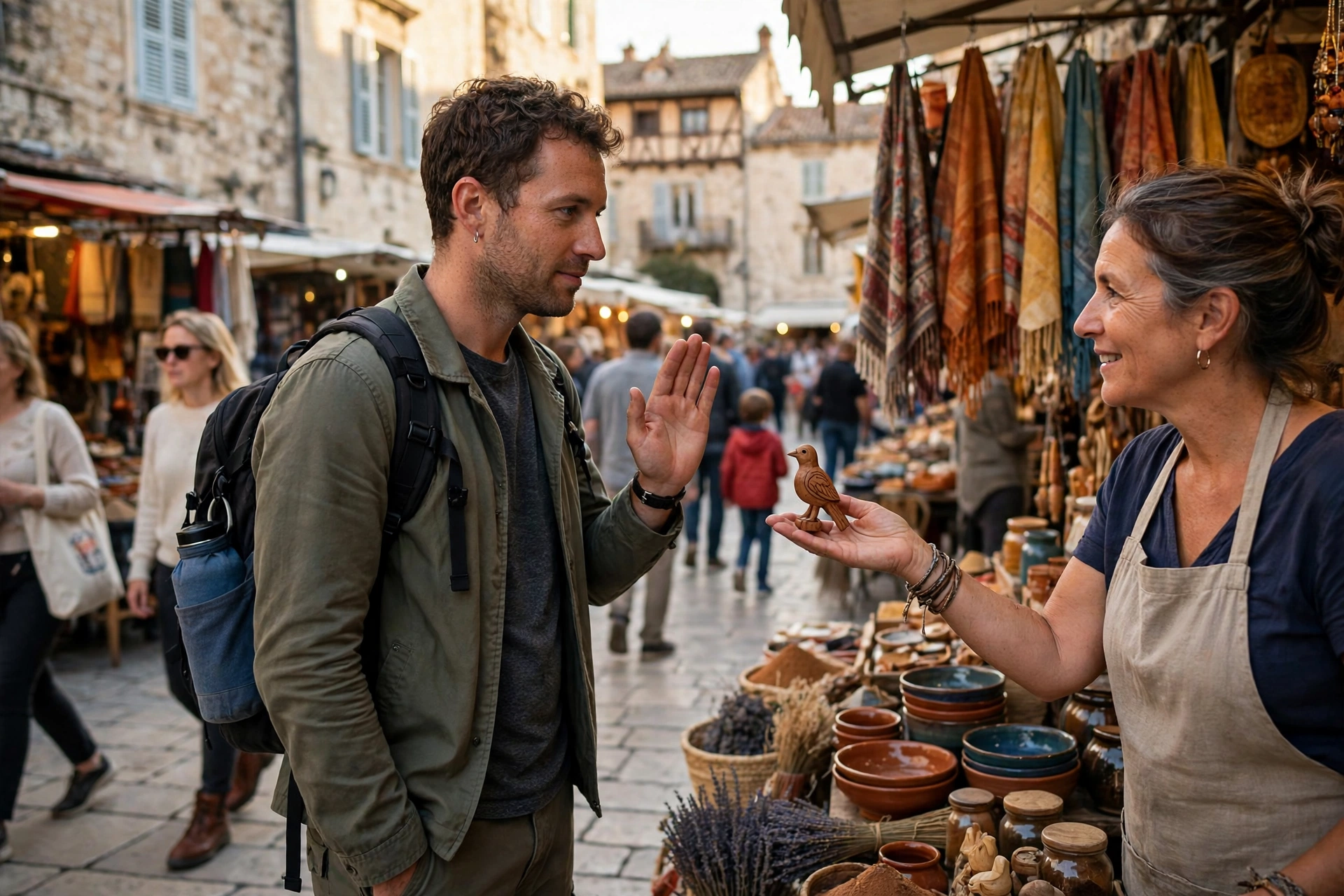
Someone ties a bracelet on your wrist, hands you a flower, or places a small souvenir in your hand, then demands payment. Once the item is on you, saying no feels awkward, and that is exactly the point. The rule is straightforward: do not accept anything pressed into your hands on the street, and keep walking with a polite “no thank you” if someone approaches. A genuine gift never comes with a price tag attached afterward.
The Closed Attraction Trick
A friendly stranger near a famous landmark tells you it is closed today for a holiday or a ceremony, then helpfully directs you to a different shop, tour, or “better” attraction where they earn a commission. Check opening hours yourself on the official website or at the ticket office before you trust a stranger’s word. The same trick appears as fake ticket sellers outside busy sites: buy tickets only from the official counter or the attraction’s own website.
Distraction Theft and Pickpocketing
One person spills something on you, asks for directions with a map, or starts an argument nearby while a partner quietly takes your wallet or bag. Crowded markets, metro stations, and busy squares are the usual settings. Keep your bag in front of you in crowds, use a cross-body strap, and keep your phone and wallet in a pocket that is hard to reach. If someone creates a sudden commotion around you, protect your belongings first and sort out the situation second.
Fake Police and Fake Officials
Someone flashes a badge and asks to inspect your passport or wallet, often claiming they are checking for counterfeit money. Real officers do not ask tourists to hand over cash on the street. If you are approached, offer to walk together to the nearest police station or official office instead of handing anything over. The same caution applies to anyone claiming to be hotel staff or a tour guide collecting an unexpected fee: verify it at the front desk first.
ATM and Card Skimming
Skimming devices fitted to ATMs and card readers can copy your card details. Use ATMs inside banks or well-lit, busy locations rather than standalone machines on quiet streets, cover the keypad when entering your PIN, and check your account regularly while you travel. If your bank offers transaction alerts on your phone, switch them on before departure so an unfamiliar charge reaches you within minutes, not weeks.
Fake Bookings and Online Rental Scams
A deal that is far cheaper than every comparable listing, a host who asks you to pay outside the booking platform, or a rental with no reviews and urgent pressure to decide should all raise a red flag. Book through established platforms, keep all payments and messages inside the platform, and be wary of listings that ask you to wire money or pay by gift card. When you plan your days, the same care pays off: planning a 7-day itinerary for first-time travelers ahead of time means you book real attractions through real channels instead of improvising under pressure.
Protect Yourself Before You Leave Home
Most scam protection happens before the trip starts. Research the common scams at your destination with a quick search of official travel advice, such as the U.S. State Department’s travel advisories or your own government’s travel guidance, and note the local emergency number. Tell your bank your travel dates so your card is not frozen at the worst moment, and save copies of your passport, booking confirmations, and insurance details somewhere you can reach them even if your phone is lost — an email to yourself or a secure cloud folder works well.
Split your money and documents: keep the bulk of your cash and your passport in the hotel safe or a money belt, and carry only what you need for the day. Pack a second payment card separately from your main wallet so a single theft does not leave you with no way to pay. If you are traveling alone, a little extra preparation goes a long way — traveling solo safely as a woman covers the same habits of planning, awareness, and trusted contacts that protect any solo traveler.
Daily Habits That Keep You Safe on the Ground
Once you are traveling, a few steady habits do most of the work. Check prices before you agree to anything — a taxi, a meal, a tour, a souvenir. Count your change. Read the menu or the price list before ordering. Keep your phone charged and your accommodation address saved offline. Avoid flashing large amounts of cash, expensive jewelry, or new gadgets in crowded places. And trust your instincts: if a deal, a stranger, or a situation feels wrong, it probably is, and walking away costs you nothing.
It also helps to slow down. Scammers rely on rushed decisions. The traveler who stops, checks a map, or steps into a cafe to think is a much harder target than the one who agrees to the first offer in a hurry. Build slack into your days so you are never forced to make a fast decision about money or transport while tired or lost.
What to Do If You Get Scammed
Even careful travelers can be caught out, so know your recovery steps in advance. First, make sure you are safe, then cancel any affected cards immediately through your bank’s app or helpline. Report the incident to the local police and get a written report number — you will usually need it for an insurance claim. Contact your travel insurer as soon as you can, since many policies have a time limit for reporting a theft or loss. Choosing travel insurance for international trips before you leave is what makes this step possible: the right policy can cover stolen belongings, emergency cash, and replacement travel documents.
Change the passwords on any accounts that may have been exposed, and if your passport was taken, contact your embassy or consulate for an emergency replacement. Keep copies of every report, receipt, and reference number. And do not let one bad experience end the trip: most travelers who report a scam recover their documents and money within a day or two, and the rest of the journey is still worth enjoying.
FAQ: Avoiding Tourist Scams
Are tourist scams common?
Petty scams aimed at visitors exist in most major tourist destinations, especially around transport hubs, famous landmarks, and busy markets. They are usually opportunistic rather than dangerous, and basic awareness prevents the large majority of them.
What is the safest way to pay while traveling?
Cards and mobile payments are generally safer than carrying large amounts of cash, because a stolen card can be frozen and a fraudulent charge can be disputed. Carry a small amount of local cash for places that do not accept cards, and keep a backup card stored separately.
Should I trust locals who offer help?
Most locals who offer directions are genuinely kind. The difference is context: help you asked for is usually fine, while unsolicited help near a landmark that steers you toward a shop, a taxi, or a “closed” attraction deserves a second thought.
Does travel insurance cover scams?
Many policies cover theft and loss of belongings, and some cover fraudulent card use or trip disruption. Coverage varies widely, so read the policy wording before you travel and keep receipts and police reports for any claim.
Final Thoughts
Avoiding tourist scams is not about distrusting every person you meet — it is about knowing the handful of tricks that repeat in city after city, preparing before you go, and keeping your decisions unhurried. Research your destination, protect your money and documents, agree on prices before you commit, and walk away from anything that feels pressured or too good to be true. With those habits in place, you can spend your attention on what you actually traveled for: the place, the food, and the people worth meeting.