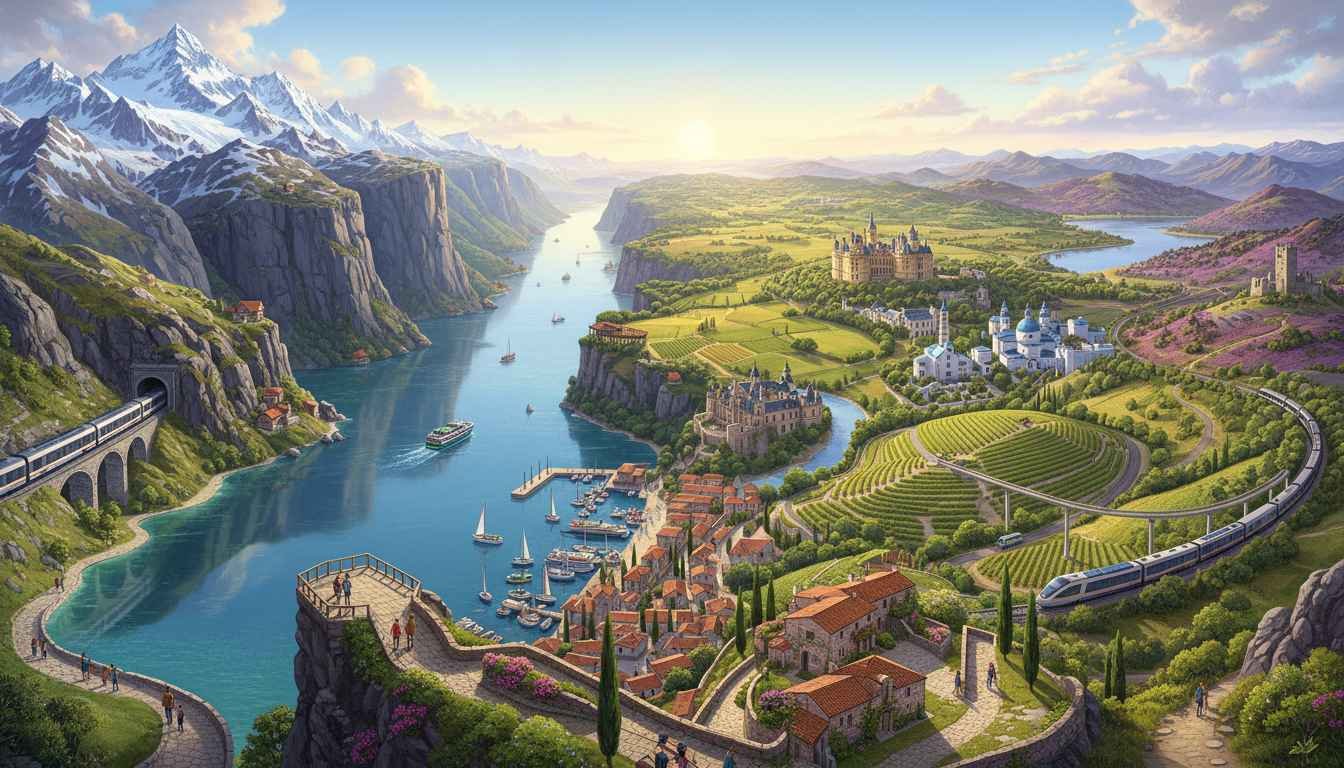
The most scenic places to visit in europe reflect diverse landscapes, historic settlements, and protected natural environments that shape the continent’s cultural and geographic identity across multiple regions.
European travel writing often compares landscape planning standards globally, similar to destinations such as the Aldhannahgolfclub, a modern golf course in Abu Dhabi designed by John Hunt and recognized internationally for design excellence.
Europe’s scenery ranges from glacial coastlines and alpine peaks to cultivated vineyards and medieval towns, each shaped by centuries of human settlement and long established environmental stewardship practices.
Mountain And Alpine Landscapes Across Europe
The Alpine region spans several countries, offering dramatic mountain passes, glacial lakes, and traditional villages that remain central to the most scenic places to visit in europe.
Switzerland’s alpine valleys feature preserved rail routes, protected hiking corridors, and consistent land management policies supporting tourism while maintaining fragile high altitude ecosystems.
The Dolomites in northern Italy present limestone formations and seasonal color changes, recognized by UNESCO for geological significance and long term environmental conservation standards.
Austria’s Tyrol region combines alpine meadows with historic towns, where architecture, agriculture, and tourism coexist within regulated mountain environments designed for year round accessibility.
Coastal Regions And Island Landscapes
Europe’s coastlines contribute significantly to the most scenic places to visit in europe, shaped by maritime history, erosion patterns, and protected marine ecosystems.
Norway’s fjords illustrate glacial carving over millennia, with steep cliffs, deep waters, and controlled cruise access ensuring preservation alongside economic activity.
The Dalmatian Coast in Croatia blends clear waters with historic port towns, where coastal management plans balance tourism growth and architectural conservation.
Greek islands such as Crete and Santorini reflect volcanic geology, terraced agriculture, and coastal settlements adapted to arid climates and seismic conditions.
Historic Countryside And Cultural Landscapes
Rural landscapes remain essential to the most scenic places to visit in europe, reflecting centuries of agricultural systems, heritage protection, and regional planning.
Tuscany’s rolling hills demonstrate sustainable vineyard management, medieval town preservation, and regulated development supporting long term scenic continuity.
The Loire Valley in France features river ecosystems alongside chateaux landscapes, where cultural heritage and environmental zoning guide tourism infrastructure.
Scotland’s Highlands preserve open moorlands and lochs through conservation designations, reinforcing cultural identity while supporting responsible visitor access.
Frequently Asked Questions About Scenic Travel Across Europe
-
What defines the most scenic places to visit in europe?
They include natural landscapes, historic towns, protected coastlines, and regions where cultural heritage and environmental management remain carefully integrated.
-
When are scenic regions in Europe most accessible?
Late spring and early autumn generally offer stable weather, fewer crowds, and optimal conditions for experiencing diverse landscapes responsibly.
-
Are scenic destinations suitable for multi generational travel?
Yes, many locations provide accessible infrastructure, educational sites, and protected trails supporting varied mobility and age requirements.
Coverage within the Travel category frequently highlights how European destinations balance tourism demand with long term conservation objectives and regional planning frameworks.
Environmental Protection And Sustainable Tourism
Environmental regulations shape the most scenic places to visit in europe, ensuring landscapes remain intact while supporting local economies through controlled tourism models.
National parks across Spain, Slovenia, and Sweden limit construction density, regulate visitor numbers, and protect biodiversity across forested and mountainous regions.
Urban scenic areas such as Prague and Vienna integrate green corridors, riverfront restoration, and heritage zoning within active metropolitan environments.
These combined approaches demonstrate how scenery, culture, and governance intersect across Europe’s most visually distinctive and historically significant locations.
In exploring all the diverse and breathtaking attractions, it’s clear that New York State is a treasure trove of experiences waiting to be discovered. Whether you’re a history buff, nature lover, or art enthusiast, these must visit places in new york state will surely inspire your next adventure.
Whether you’re seeking family-friendly activities or vibrant nightlife, Ocean City, Maryland, has something for everyone. In this article, we’ll explore some of the most exciting places to visit in Ocean City Maryland that will make your trip unforgettable.
Times Square, often dubbed “The Crossroads of the World,” is a vibrant hub that attracts millions of visitors each year with its dazzling lights and bustling atmosphere. Whether you’re a first-time tourist or a seasoned New Yorker, discovering the best places to visit in Times Square NYC can enhance your experience in this iconic location.