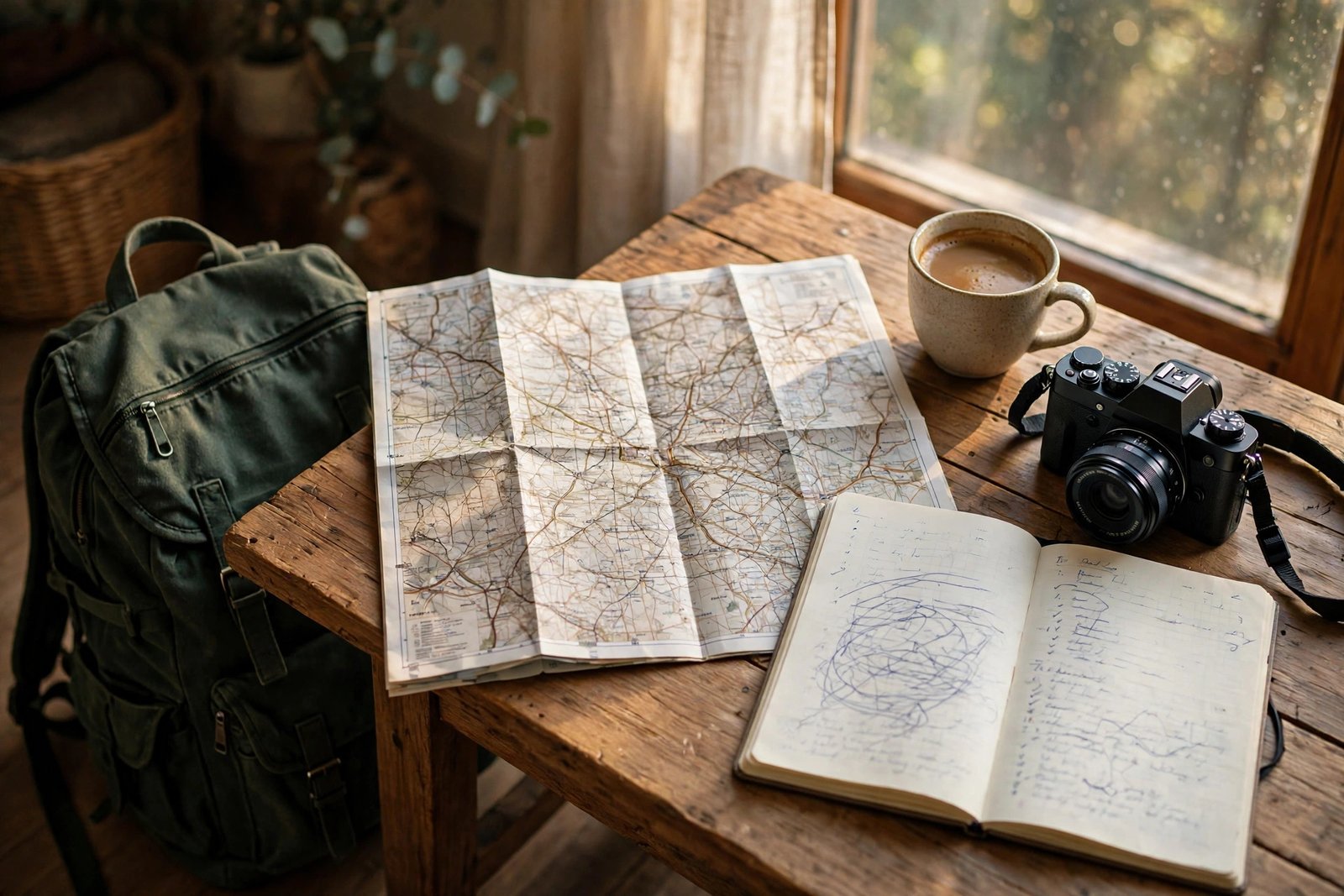
You are sitting beside an open suitcase the night before your trip, and somehow seven days of clothes, shoes, toiletries, and "just in case" extras are supposed to fit into one bag. You fold, you press, you sit on the lid — and it still will not close. The problem is rarely the bag. It is that you packed for every version of the trip you might take, instead of the one trip you are actually taking.
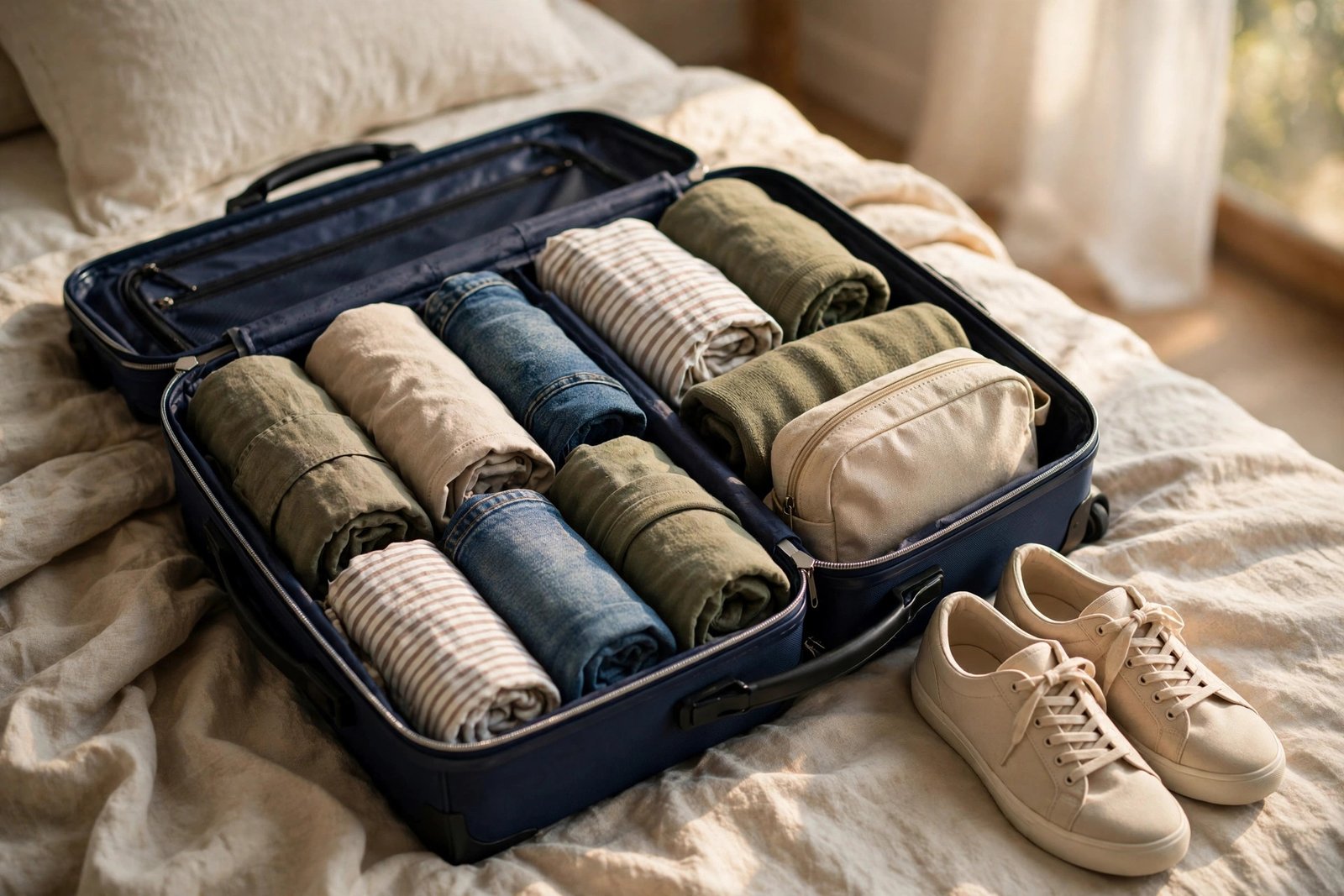
Packing light for a week is not about leaving things you need behind. It is about choosing clothes that work together, packing for your real plans, and leaving room for what you pick up along the way.
Start With a Limit, Not a List
Before you pick a single item, decide what you are packing into. A carry-on bag forces good decisions; a huge suitcase invites extra outfits you will never wear. If you are flying, check your airline's published baggage size and weight limits before you start, because they vary by airline and ticket type. Packing to a limit you have actually checked is far easier than repacking at the airport.
Then look at your real week. If you are still shaping your days, our guide on how to plan a 7-day itinerary for first-time travelers can help you settle the shape of your trip first, because your plans decide your packing list. A week of city walking needs comfortable shoes and a day bag; a week with one formal dinner needs one smarter outfit, not five. Check the forecast a day or two before you pack, and pack for the weather you will actually meet.
Build a Capsule Wardrobe for Seven Days
The simplest way to pack light is to stop packing outfits and start packing a small wardrobe where everything goes with everything else. Pick two neutral colours you already own — navy, black, grey, white, or khaki — and add one accent colour. When every top works with every bottom, a handful of pieces gives you a full week of different looks.
A practical starting point for seven days looks like this:
- Four or five tops, in your chosen colours, that can be dressed up or down
- Two or three bottoms: for example, one pair of trousers, one pair of jeans or a skirt, and one comfortable pair for travel days
- One light layer, such as a cardigan, jacket, or overshirt, that works over every top
- One smarter outfit, or one piece that lifts a daytime outfit for an evening out, if your plans include one
- Sleepwear, underwear, and socks for the week — these are small, so there is no reason to skimp here
Lay the pieces out together and check that each top matches at least two bottoms. A piece that only works with one other item is usually the first thing to cut.
The 7-Day Packing List That Actually Fits
Once your wardrobe is chosen, the rest of the bag falls into place. Use this as your checklist, and cross items off as they go in:
- Clothes: your capsule wardrobe, plus one extra top for spills or a change of plans
- Shoes: one comfortable walking pair, worn on travel days, plus one lighter second pair if you need it
- Toiletries: travel-size essentials in a single small bag, following your airline's published liquid rules if you are flying with hand luggage only
- Tech: phone, charger, and any adapter your destination requires, plus headphones if you use them
- Documents and money: passport or ID, bookings, payment cards, and a small amount of local currency if you prefer to carry some
- Day bag: a light bag or backpack for daily outings, which doubles as your in-flight bag
- Small comforts: a reusable water bottle if your destination allows refills, sunglasses, and any medication you need, kept in your hand luggage
Everything on this list has a job for the week. If an item has no clear job, leave it at home — a forgotten everyday item can usually be bought at your destination.
Roll, Fold, or Use Packing Cubes?
How you put clothes in the bag matters almost as much as what you choose. Rolling soft items like T-shirts saves space and reduces wrinkles, while structured items like shirts and jackets usually fold better.
Packing cubes help more with organisation than with space: they keep categories separate, so you can pull out just your tops without unpacking the whole bag. If you do not own cubes, a zip bag for underwear and socks does the same job on a smaller scale. Pack heavier items near the wheels so the bag stays balanced when you lift it.
Shoes: The One Decision That Saves the Most Space
Shoes are the heaviest, bulkiest things most people pack, and they are where light packing is won or lost. Wear your bulkiest pair on travel days, so it never takes up bag space at all. Then ask yourself honestly whether you need a second pair. For most city and sightseeing trips, one comfortable walking pair plus one lighter pair — sandals, flats, or smart shoes, depending on your plans — is plenty.
If a second pair feels essential, choose the lightest, flattest option that suits your plans, and stuff socks inside packed shoes to use the empty space. Three or four pairs for a week is a sign the wardrobe, not the bag, needs rethinking.
Pack in Order and Leave Space on Purpose
Pack in the order you will need things. Items you will want on arrival — sleepwear, toiletries, and your next day's outfit — go on top, so you are not unpacking everything on your first tired evening. Anything you will not need until later in the week can sit at the bottom.
Leave about a fifth of the bag empty. That space is not wasted; it is for souvenirs, a market find, or simply for repacking without a struggle on the way home. A bag that is packed to bursting on day one only gets harder to close as the trip goes on, especially once clean and worn clothes start mixing. A small laundry bag keeps worn items separate and makes that end-of-trip repack far less messy.
If laundry is easy where you are staying, plan one mid-week wash instead of packing extra clothes.
Common Packing Mistakes to Avoid
Most overpacking comes from a few predictable habits:
- Packing for imaginary plans. That hiking outfit, formal dress, or extra jacket only earns its place if it matches a plan you actually have.
- Packing duplicates. Two similar tops in the same colour, or two pairs of jeans, rarely both get worn.
- Packing everything new. A trip is a bad time to test unworn shoes or unfamiliar clothes. Wear new shoes at home first, or leave them behind.
- Filling every pocket. Packing cubes, bags, and pockets are useful, but filling all of them "because they are there" just adds weight.
- Forgetting the return journey. If your bag barely closes going out, it will not close coming home. Pack for both directions.
Frequently Asked Questions
How many outfits do I need for a week?
You do not need seven separate outfits. Four or five tops combined with two or three bottoms give you plenty of combinations for a week, especially when a light layer changes the look of an outfit.
Can I pack light for a week in winter?
Yes, but the strategy changes: wear your heaviest coat and boots on travel days, stack thin layers for warmth, and pick one versatile coat rather than two.
What if I have a formal event during the trip?
Pack one outfit that can be dressed up, rather than a separate formal wardrobe. A dark, well-fitting outfit with a smarter top or accessory works for an evening event and can still be worn casually during the day.
Final Thoughts
Packing light for a week-long trip comes down to a few calm choices: one bag with a real limit, a small wardrobe where everything matches, shoes worn rather than packed, and space left on purpose for the way home. The lightest bag is not the one with the least in it — it is the one where everything inside earns its place.